News
Presentation Day: “Adaptive capacities in the face of high temperature episodes in the Valencian Community”
- June 15, 2026
- Meteorology and Climatology
Extreme heat, climate shelters and tools to strengthen adaptation in the Valencian Community

On 12 June 2026, the technical and outreach event “Adaptive capacities in response to high-temperature episodes in the Valencian Community” was held at the Ciudad Administrativa 9 d’Octubre in Valencia. The event was organised by the Generalitat Valenciana and the Mediterranean Center for Environmental Studies (CEAM), through its Meteorology and Climatology Area.
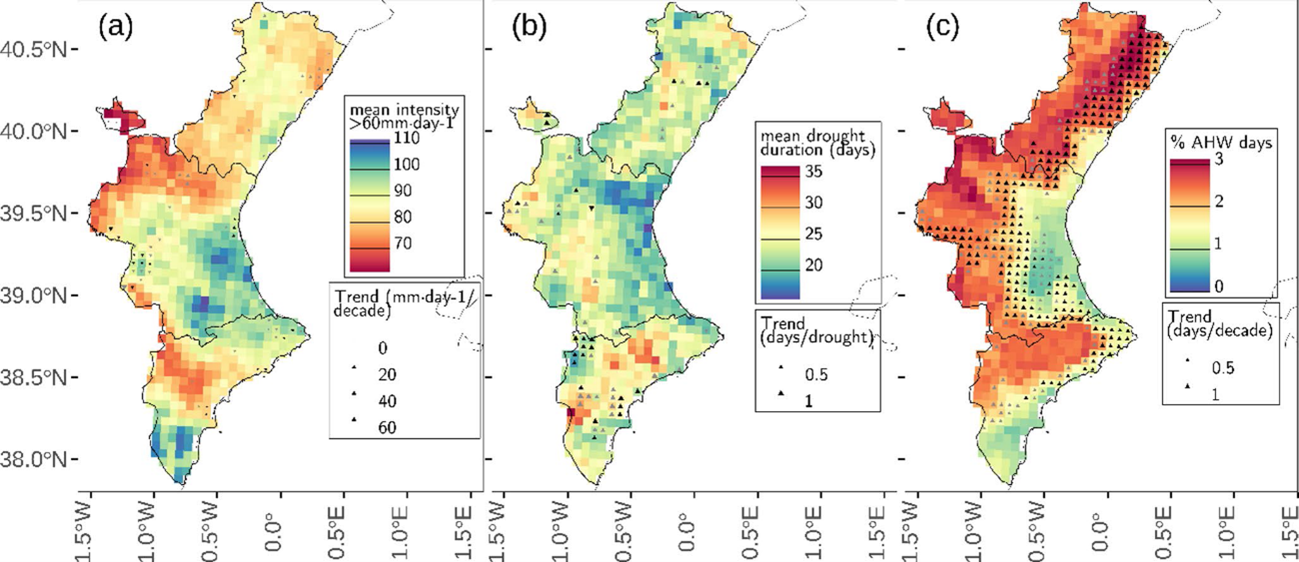
The session addressed one of the main climate challenges currently facing the Valencian Community: the increase in extreme heat episodes, which are becoming more frequent, intense and persistent, and their effects on health, urban well-being, outdoor work, education and social cohesion.
The event was opened by Sabina Goretti Galindo, Regional Secretary for the Environment, who highlighted the importance of advancing public policies and adaptation tools in response to the increasing frequency and intensity of extreme heat episodes in the Valencian Community.
During the event, the main progress made within the framework of the ADAPTACALOR-CV pilot project was presented. This initiative aims to transform scientific evidence and climate knowledge into useful tools for public administrations, municipalities and citizens. The topics addressed included the evolution of extreme heat in the Valencian Community, social perception of heat risk, the identification of vulnerable groups, the mapping of climate shelters and the development of tools to support local adaptation.
One of the key elements of the session was the presentation of VITUclim, a platform promoted by CEAM to facilitate access to urban climate information and support decision-making on heat adaptation. This tool represents a step forward in the characterisation of thermal exposure in urban environments and contributes to the design of responses that are better adapted to local realities.
Among the initiatives showcased, the Climate Spaces Network, presented by Patricia Callaghan, stood out as a tool designed to identify and promote spaces that can provide better thermal comfort and support for citizens during high-temperature episodes.
The event also served to present the actions planned until 2027 within the framework of ADAPTACALOR-CV, focusing on public awareness, education, prevention for municipal outdoor workers, social participation and the strengthening of neighbourhood support networks.
The meeting highlighted the need to reinforce coordination between science, public administration and society in order to improve preparedness for an increasingly relevant climate risk. In this regard, ADAPTACALOR-CV represents a pilot experience aimed at generating applied knowledge, transferable resources and actions that can contribute to a Valencian Community better adapted and more resilient to extreme heat.
The event concluded with a discussion session with the attendees and the institutional closing remarks by Jorge Blanco Coll, General Director for Environmental Quality and Education.